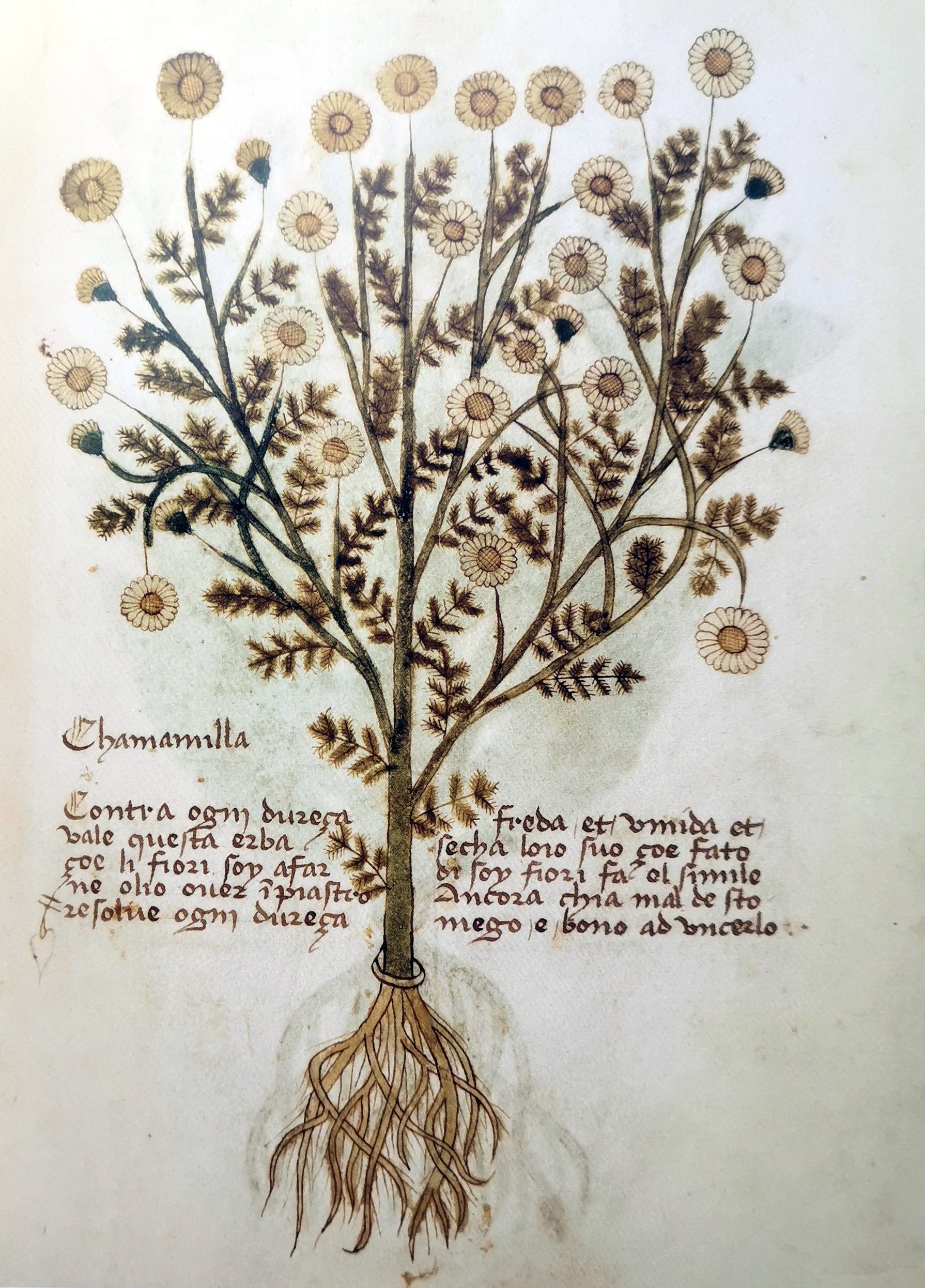
Chamomile
Folklore Fact Friday

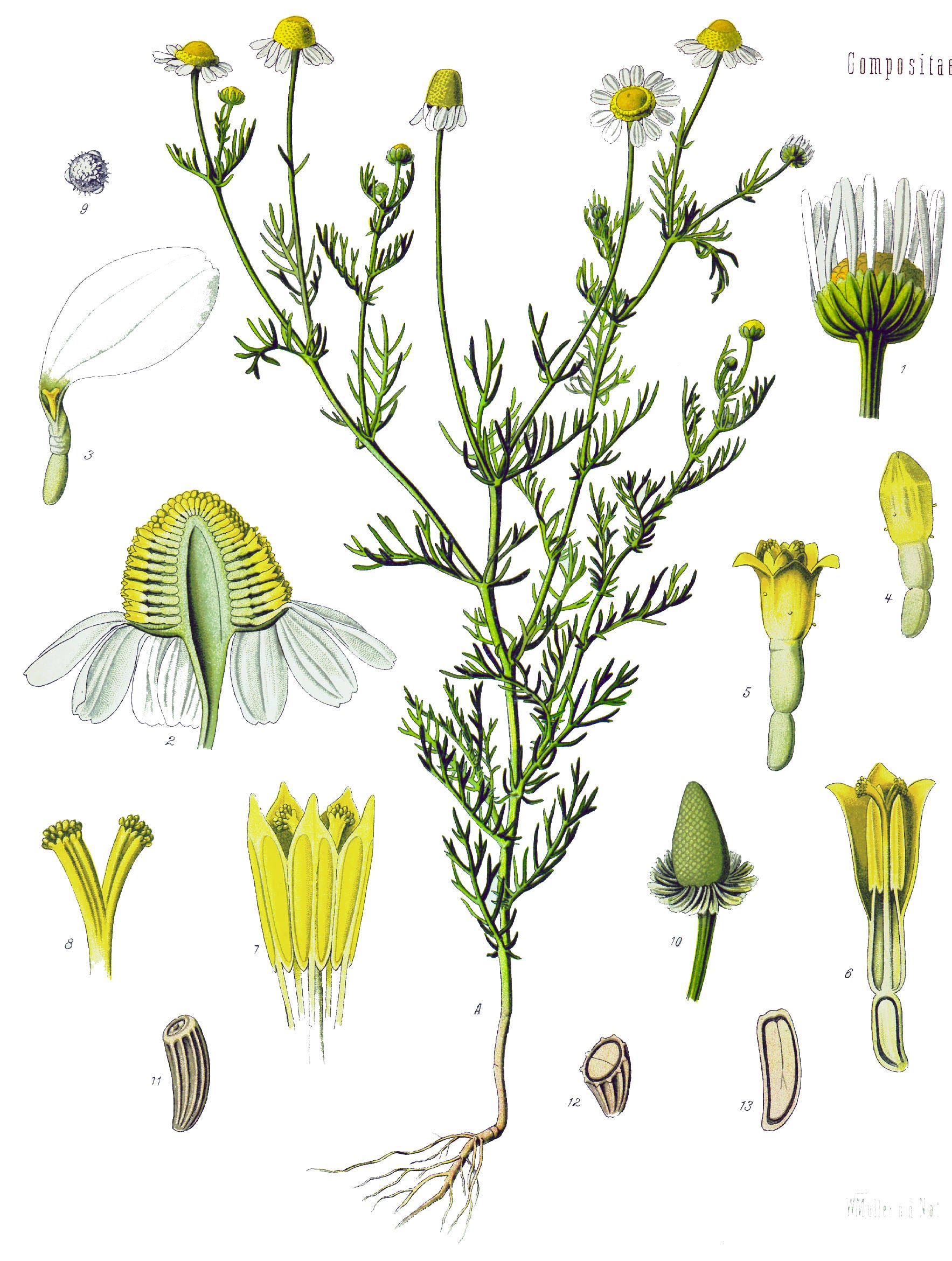
To finish our series of sunny plants, we have chamomile, one of my most beloved herbs. In Spain, chamomile is widely consumed, found in all stores and cafés, used as a remedy for stomach discomfort and nausea and for its calming properties. When I was planning my first herb garden, chamomile was first on my list of must-haves.
The “proper” chamomile species, Matricaria recutita (commonly german chamomile), is the traditionally medicinal one, while the plant called “roman chamomile” (Chameamelum nobile) is not medicinal. The key to telling them apart is the scent, for chamomile gives off its characteristically sweet, apple-like scent, while roman chamomile is scentless. It has been traditionally used for gastric and nervous complaints, safe to use in children, as well as a hair rinse to lighten hair colour and give it shine.
This herb has a long history in medicinal and folkloric use. It is one of the nine sacred plants from the Anglo-Saxon “Nine Herbs Charm”, a famous spell containing nine herbs and calling on the aid of Woden (the germanic denomination of Odin) to heal poisons and illnesses. It has been used as a strewing herb since the Middle Ages to protect the house and keep out negative magic. It has also been traditionally used for washing scrying mirrors and other magical items related to divination. Placed in the wallet it will attract money, and washing your hands with an infusion will give you luck in gambling. It also symbolizes resilience against adversity, for the more they’re stepped on, the more they grow and spread.