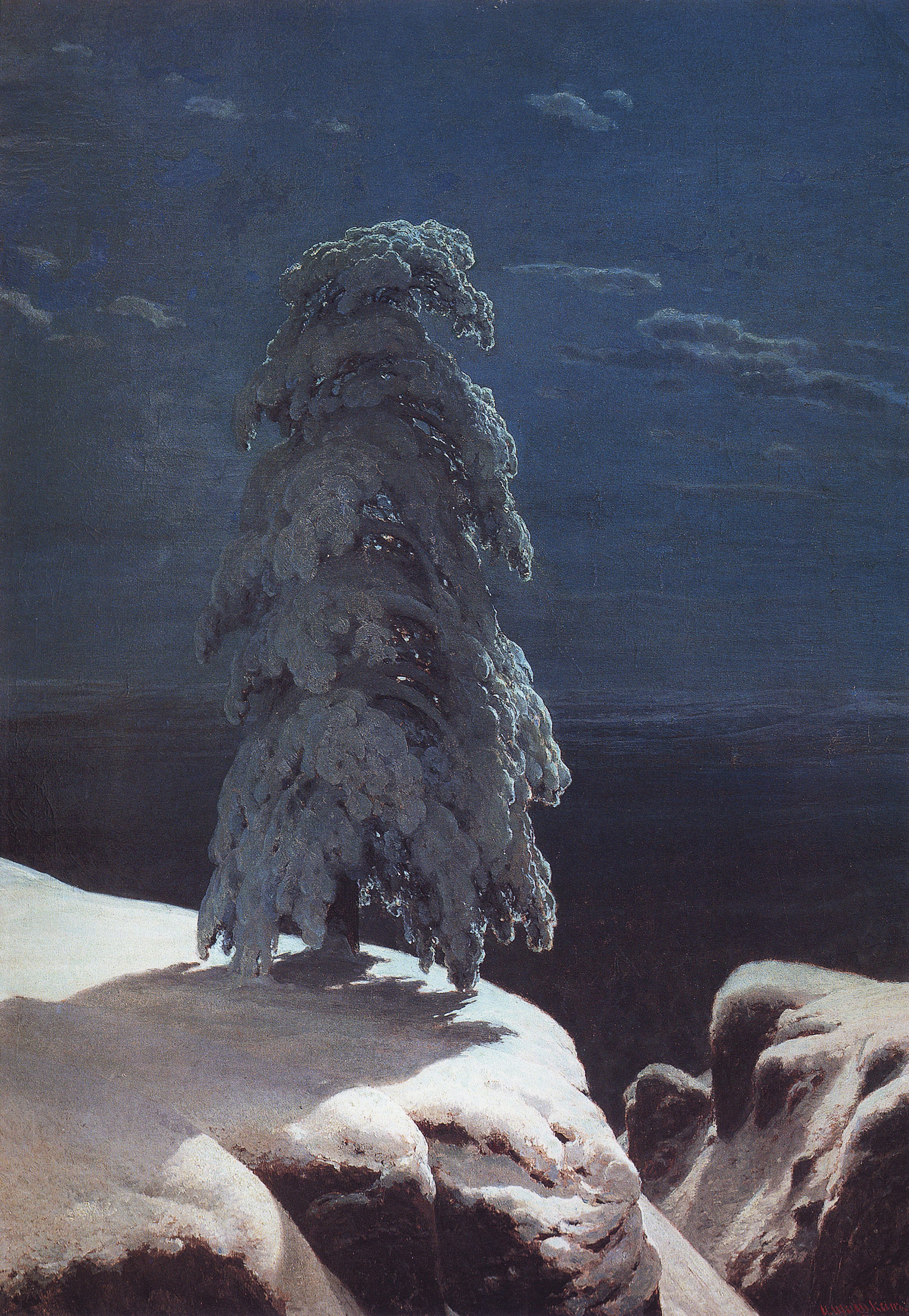
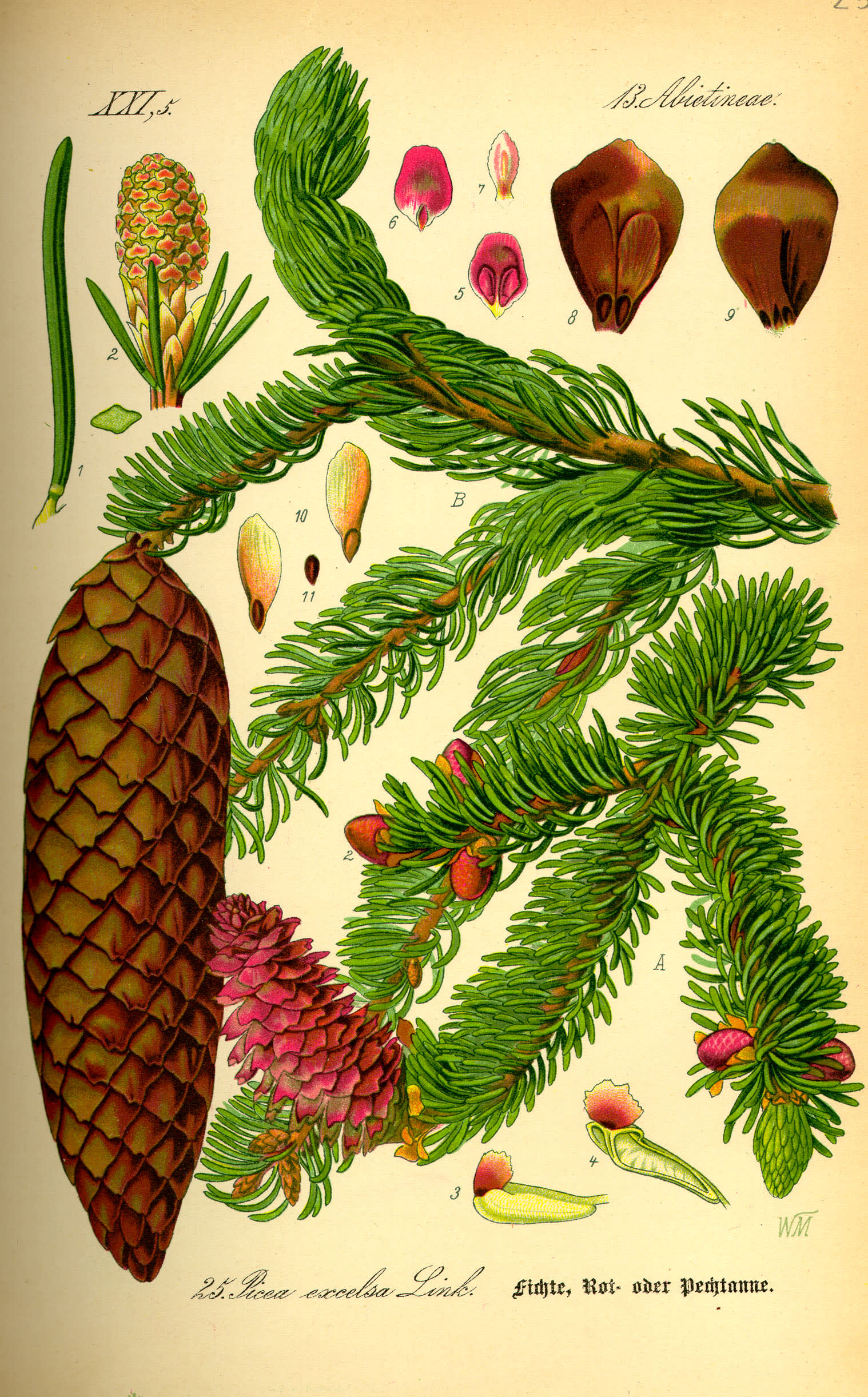
Spruce
Foklore Fact Friday

The spruce is a tree that has a prominent role in Nordic folklore. In Sweden, many popular rhymes are attributed to it: “if you cut me down, you won’t have anything to build your house with this winter”, says the spruce to the lumberjack to avoid being cut. As an evergreen, it was also thought to possess magical properties, symbolising life and the power of all growing things. Because of this, it was a common decoration at weddings!
It was common to use the needles as a protective amulet, as their pointy shape were thought to grant protection against supernatural forces. Branches of spruce mixed with hay, spread on the floor at Christmas, not only served to fill the house with its wonderful smell, but protected against supernatural creatures and harmful magic on this dangerous night. Its scent was also believed to have healing powers, driving away all evil, and the resin was used in folk medicine for healing headaches and to make salves for wounds.
Spruce needles could also be used in burials as protection against the walking dead. Branches would be placed on top of the grave both to protect from the person rising again and to symbolise eternal life. It was also common for someone to go ahead of the funerary procession placing spruce branches in the form of a cross on the way to the church, so that the dead could not find their way back home.
Christmas trees, as we know them today, have been used in Switzerland and Germany as early as the 16th century. In Sweden, the Christmas tree began appearing among the bourgeoisie during the 18th century and later spread to the common folk during the latter half of the 19th century. However, a much older folkloric tradition predates it in Sweden, the Julstång, a pole fashioned out of spruce with a star or cross shape at the top and many decorations, likely a remnant of pagan times. Folklorists argue that transitioning to the Christmas tree we know today was therefore not so difficult for the population.