
The Gast
Folklore Fact Friday

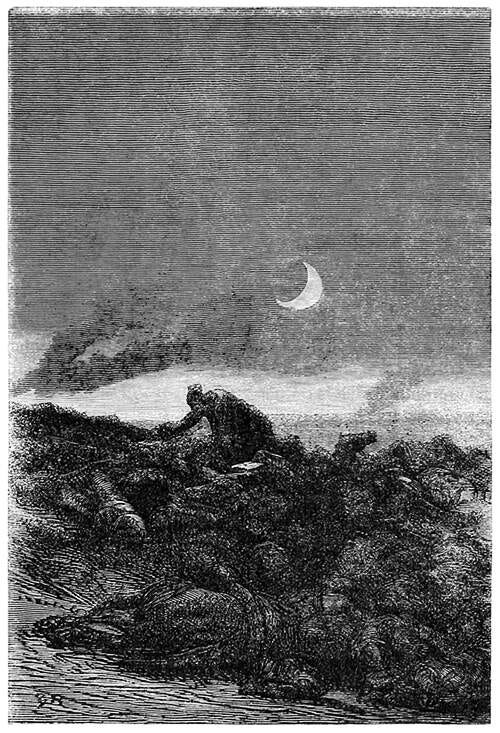
Swedish folklore has many versions of ghosts or revenants, spirits that cannot rest in peace in the afterlife. The gast (singular) is someone who died a violent, untimely death and was not allowed to rest in consecrated ground. Those who were murdered, drowned, committed suicide, or died in some other violent way risked being transformed into a gast. They could also have been downright evil people who, filled with hatred for the living, continued to spread terror in their surroundings even after death.
Though these gastar (plural) usually remain invisible, when they reveal themselves they do so in a horrifying form which has lost all its humanity. Folk records describe them often as tall, monstrous figures, often with claws and sharp teeth, and so black that they seem to have been created from darkness itself. In some cases, they can be gigantic and have been described as tall as fir trees. More often one could simply hear its bloodcurdling wailing and screams.
Anyone who encounters a gast at night is struck by a suffocating illness, called to be “gastkramad” ("gast-hugged"). The invisible gast would suck the life force out of them; sometimes it went further to attack and eat humans, although mostly only those who were involved in his or her death, or a relative of that person.
Gastar have their dwellings by a tree or a cairn near the place of death, and if they do not make it back in time before sunrise after their nightly roaming, they become trapped. These beings are called day-stayers (dagstannare) and must remain in the same spot until the sun sets again.
The most common accounts of gastar tell of those who traveled at night with horse and cart. At a certain crossroads, the load suddenly became so heavy the horse could barely pull it. If one had the sight, one might catch a glimpse of a gast that had sat on the wagon seat and was weighing down the cart. They could even unscrew the wagon wheels for people at the most inconvenient moments.
Have you ever heard of these peculiar zombies?