
Trolls
Folklore Fact Friday

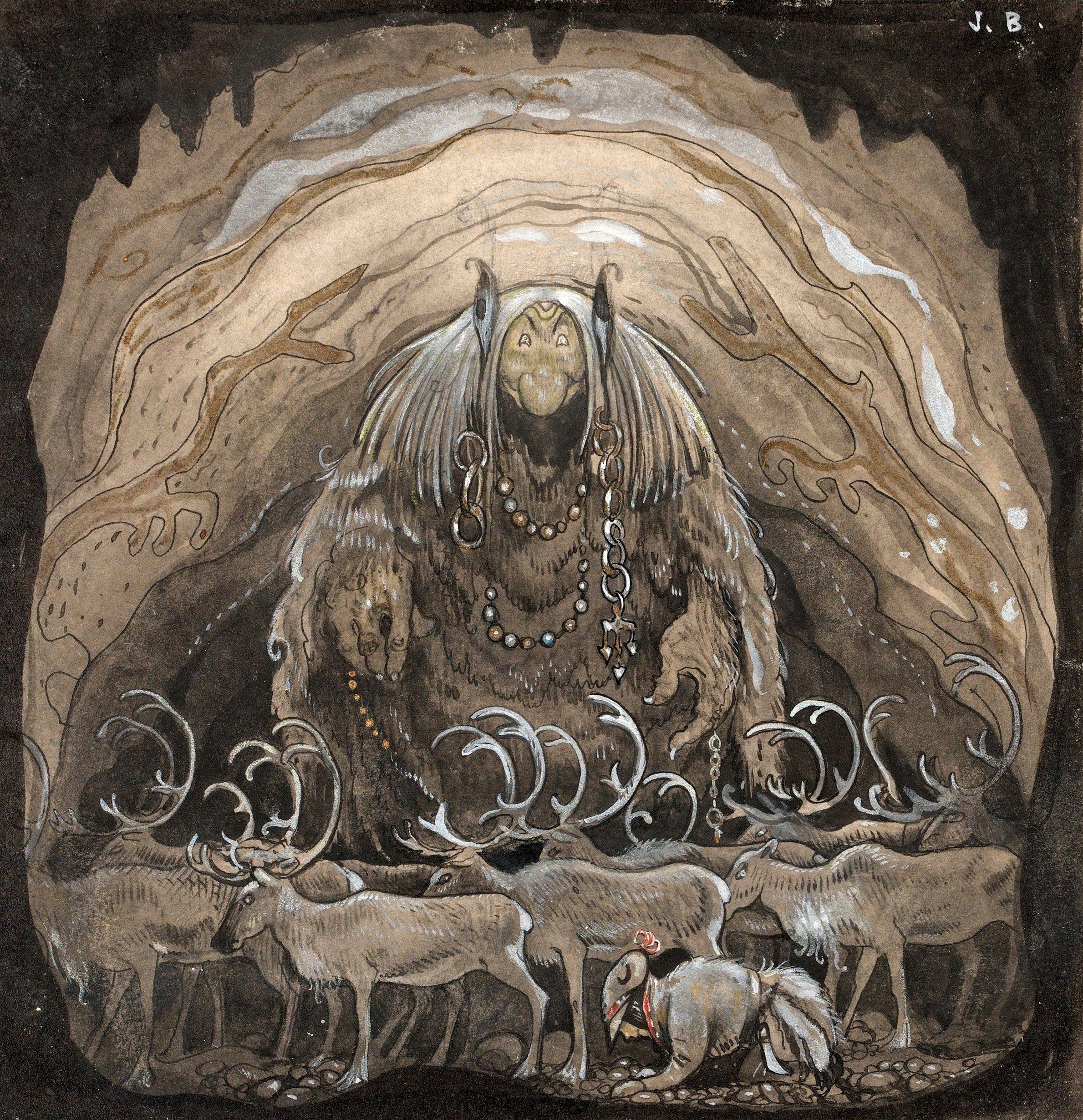
Trolls are perhaps the star of Nordic folklore when it comes to supernatural creatures, represented in all manner of media and literature and famous worldwide, a part of our popular culture. However, the history of these creatures is as long as it is complex. They have had all manner of visages and characteristics, can be helpful or evil, and differ greatly between folklore and fairy tales.
The word troll appears already in the Old Norse mythology, usually signifying the giants, and thus it’s not uncommon for there to be a conflation between trolls and giants in folklore. Trolls are often associated with mountains, where they could for example help in mining by breaking down large boulders and transporting them just as easily as they could cause landslides.
In popular belief, trolls often appear as humans dressed in fine clothes, which marked them as deviating - for one did not normally encounter a richly dressed person out in the mountains. They could also be unusually beautiful, have a tail, a long tongue or a unibrow. They could however also be terribly ugly, with a dark look and evil manner to them. The problem with describing them is that they’re known shapeshifters, appearing as anything from an animal, to a tree, boulder or household object, or even as a near relative.
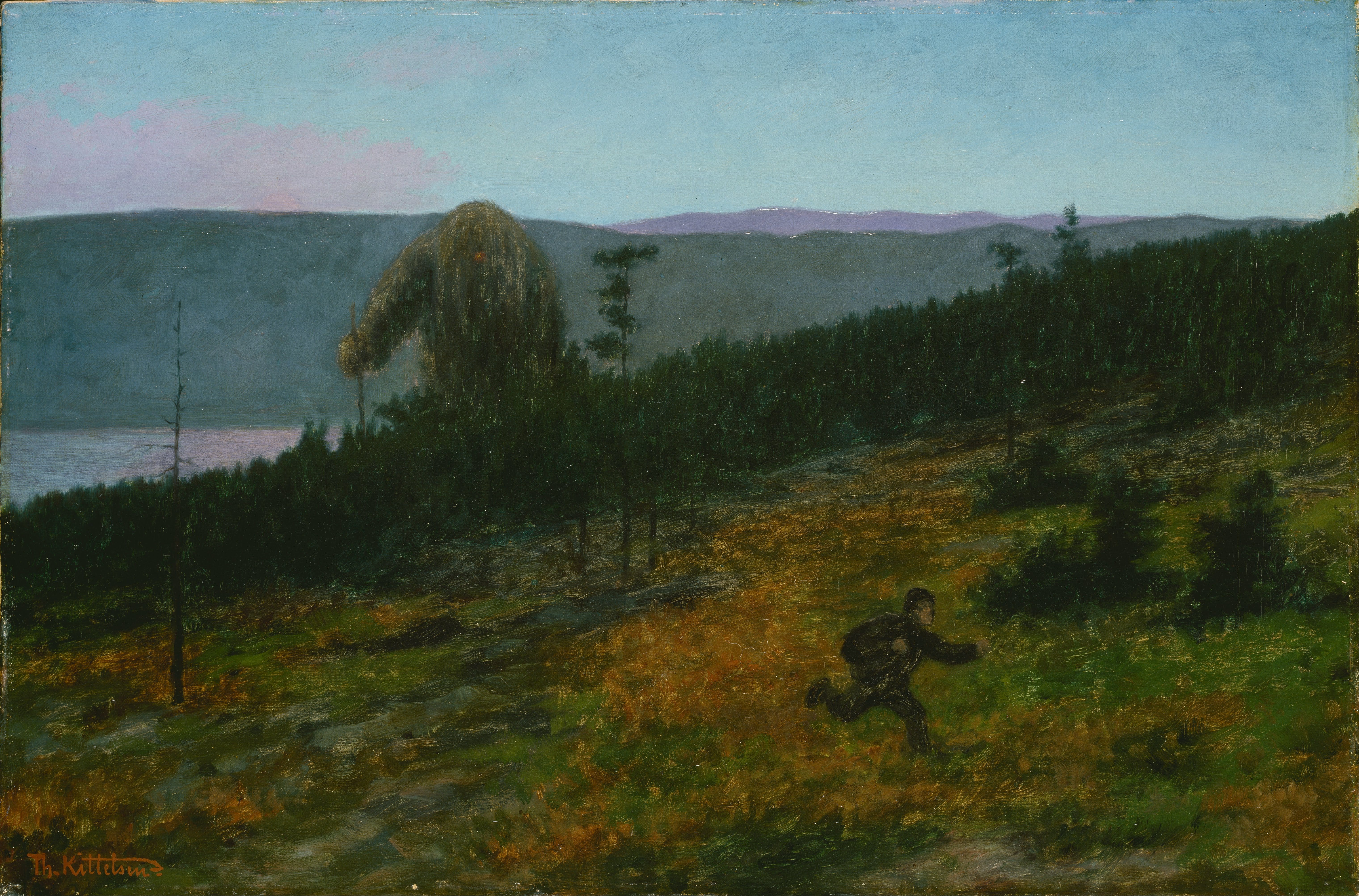
Equally contradicting are the details of where they live. Some tales put them in the wilderness, encountered in deep forests near the mountains, while others describe them as friendly neighbours, helping out in the human farm and lending tools to each other. Here, the trolls had lives parallel to the humans, living in families, getting married, holding funerals and herding their animals just like any other person. In these cases, trolls are often hired for their services; the male trolls, with their unnatural strength, can plow and sow better than any human, while the female ones will spin and weave the finest thread of wool. One story tells of a woman who had a troll-woman make a cloth for her, which was so fine, it was donated to the local church as an altar cloth. The reverse happened as well, where a troll-woman commissioned a human one to spin and weave a cloth. It was extremely important here to not spit on one’s fingers, a common practice to moisten the thread while working, for spit had the power to repel evil, so the troll-woman would not be able to take the cloth.
One of the most common dangers that trolls posed to society was kidnappings (bergtagen in Swedish - “mountain taken”). Trolls could kidnap both adults and children as well as animals, being the liminal phases of life the most risky ones to be out and about in the wilderness (before marriage or after giving birth, for example). Changeling lore also belongs to trolls in the Nordics, for newborn, unbaptised children are also at risk. The hostage remains in the mountain not only under physical threat, for the trolls are believed to have power over the person’s mind once they are in the mountain. It was thus important to never give one’s name to a stranger met in the wilderness, lest it be a troll in disguise, for they could gain power over a person if they knew their name. One should also avoid to answer “yes” to any question posed, for the troll could take this as consent.
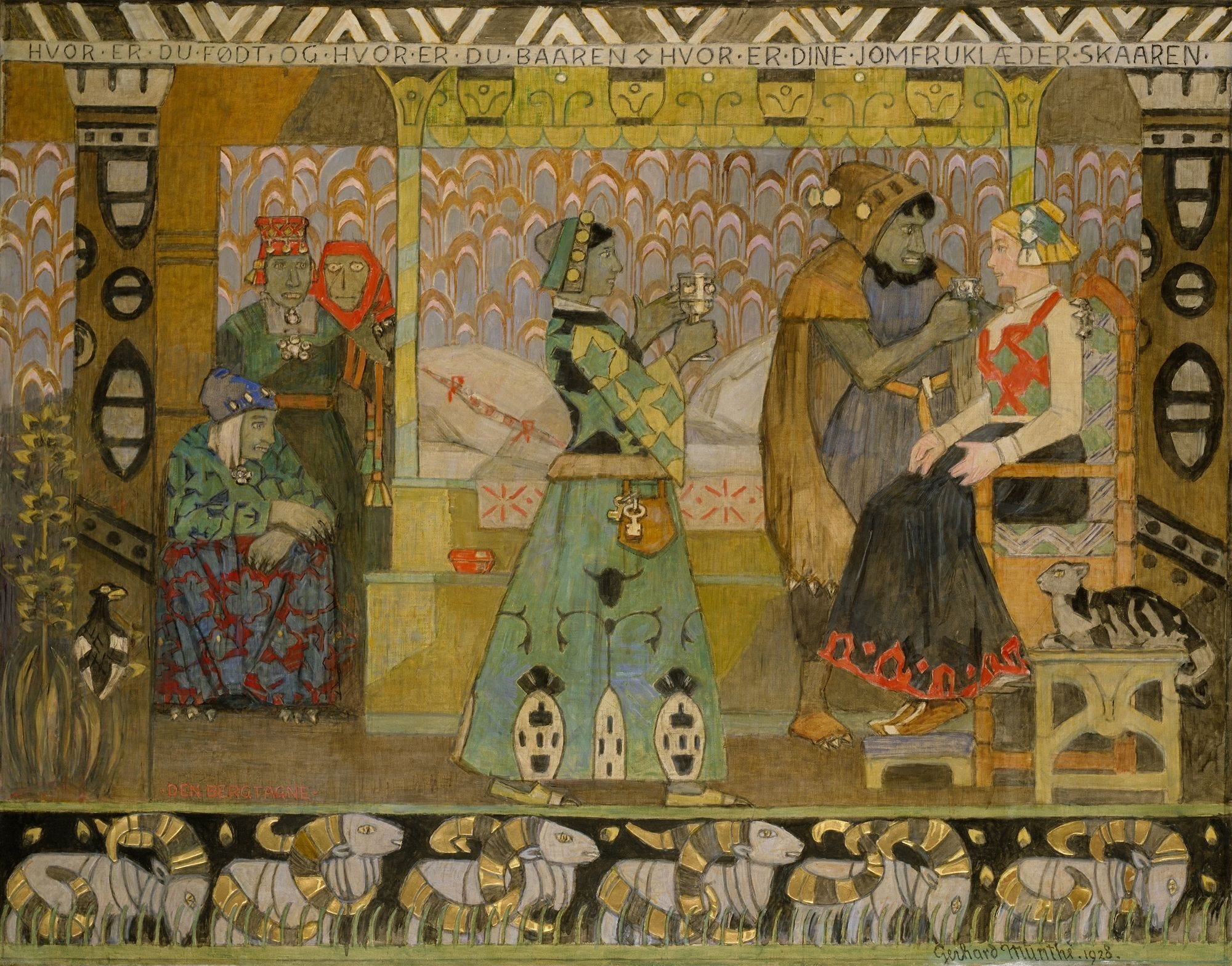
The descriptions of the troll kingdom tell us of bright and lavish rooms richly decorated, yet, if one had the presence of mind to speak God’s name or say a psalm, the enchantment would fall away, revealing a dank and dreary cave. How one comes to be in the troll kingdom is never described; it happens in a haze of events: one second you’re in the woods, the next, you’re in the mountain surrounded by trolls. The ancient motif of not partaking in food or drink offered in this realm applies, for if one did, one could never escape. Often, adults would be forced to marry a troll and have their children.
Some people could be rescued from the mountain, usually by ringing the church bells so loud that the trolls would release their prisoner, being unable to stand the noise. The local priest could also go and read psalms by the mountain to make the trolls release the prisoner. However, most of these tales do not have a happy ending. The trolls could release their prisoner somewhat forcefully, by casting them down the mountain or giving them back as a corpse. Even if peacefully released, many of the hostages are never the same, as we often see in tales of people stuck in the land of the Fae. They would go mad, sicken and most often die shortly after.
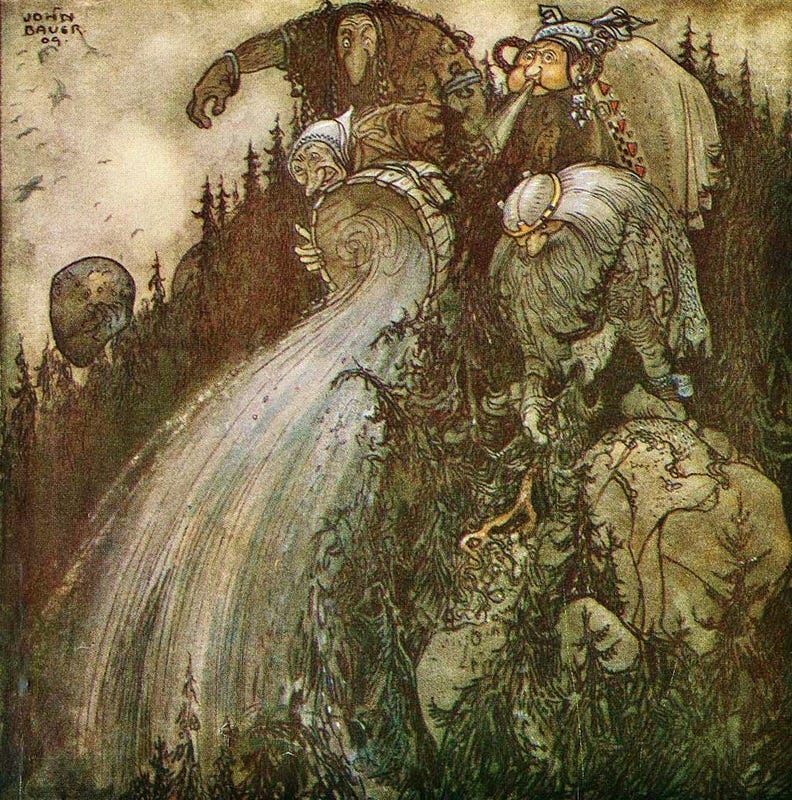
Trolls were also said to guard great treasures, which they usually hid under some glamour, which made the gold look like a simple pile of leaves. Some people were lured into the mountains with the sight of the treasure, while others could successfully steal from the trolls. The most common motif in this line is that of the troll’s magical hats, which granted them invisibility. The trolls would use these hats to sneak into human parties, and the food at these events would disappear incredibly fast. If anyone spoke God’s name, the enchantment would break, revealing the troll among the unsuspecting guests. Sometimes, the trolls would lend the hats to their hostages, so they could go down to the village to see how their families were doing, but, since they were still under the troll’s power, were unable to reveal themselves, and had to go back into the mountain.
A particularly long post, this one! Did any of this folklore surprise you, compared to the image popular culture has made of trolls?