
Weather Magic
Folklore Friday

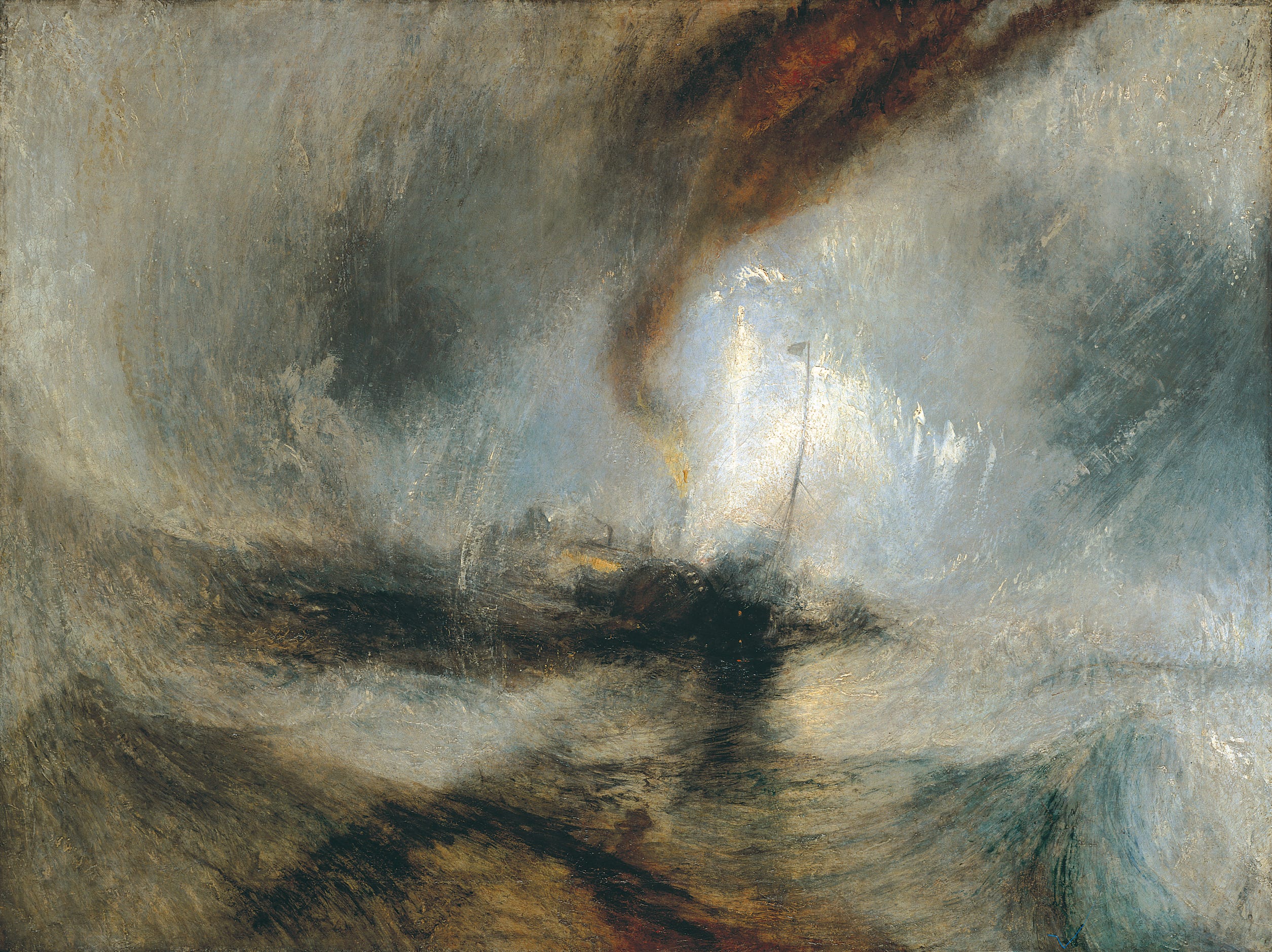
The ability to influence the weather has long been described and coveted by our ancestors, especially in regions where the weather made the difference between life and death.
The Nordic region is harsh even today; in Viking Age Iceland, being caught in a sudden snowstorm would mean certain death. Thus, we see in the saga literature, though penned down in the Middle Ages, remnants of a tradition of powerful people, men and women alike, who could command storms to sink their enemies’ boats or trap them out in snowstorms. For example, a man, tired of his wife consorting with another, hired a witch’s services to call on a terrible storm to trap the man when he was on his way to meet his wife.
“But Thorod made a bargain that winter with Thorgrima Witch−Face that she should bring a storm on Biorn as he went over the heath; and on a day Biorn fared to Frodis−water, and in the evening when he was ready to go home the weather waxed thick, and somewhat it rained, and he withal was rather late ready; but when he came upon the heath cold grew the weather, and the snow drave down, and so dark it was that he might not see the road before him. Then came on a storm, with such hail that he might scarce keep his feet, and his clothes, which before had got wet through, took to freezing on him, and he was so wildered withal that he knew not which way he turned; but in the night he found a cave in the rocks and went therein and abode there that night, and cold harbour he had” - Passage from Eyrbyggja Saga, translated by William Morris & Eirikr Magnusson.
Knowledge of weather magic lives on in the 1500s, as we see from the many writings of Olaus Magnus in his famous work History of the Northern Peoples. As a good Catholic archbishop, he does not take a kind view on using heathen magic to control the weather, and recommends instead in Book 1: In order that towns and ripening crops might not be struck by lightning, certain religious ceremonies are observed throughout the Catholic Church, namely that one seeks to avert the wrath of thunder by ringing bells, by the sprinkling of holy water, by the burning of consecrated wax candles, by incense, and by fervent prayers.
However, it seems that the peoples of the north still believed in the old gods, for he continues: It is also remarkable that these remedies aim at the same end as those practices in which one performs sacrifices or offers skins of sacrificial animals or wreaths from the fields to pagan gods—things which are to be regarded as superstition and delusion.
He further denounces witches and names their power to call on storms in various passages of Book 3 :
What power these hags possess to poison the air by darkening the light of the sun, calling forth storms, uprooting trees, and devastating forests and fields, is well known to all who examine these mad practices more closely.
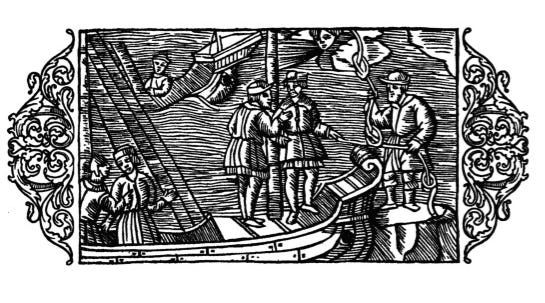
What power sorcerers possess over the elements — by incantations, by charms, or by other means — to release them according to their will, whether gently or violently, is shown by the image above in which a man is depicted releasing the wind.
In popular folklore and spread all over the world, a common magical charm we find to control the wind is that of a rope tied with knots. This likely has its origin in the Odyssey, whereby Odysseus receives from Aeolus, “The Keeper of the Winds”, an ox-hide bag that contained strong winds, which he could open to release powerful gales. We thus see a motif in folklore of witches and magicians crafting a rope tied with three knots which they give to sailors, advising them that undoing the first knot will bring about a mild breeze, the second a strong wind, and the third a mighty storm. Usually, the receiver of the rope is foolish enough to undo all three knots at once, causing a great storm and subsequently drowning.
Olaus Magnus tells us of this as well: Not infrequently did the Finns, among other heathen delusions, keep winds bound and for sale to merchants, who were forced by adverse conditions to remain along the coasts, so that in exchange for payment they were given three tightly knotted cords. They were carefully instructed that if they loosened the first knot, they would obtain mild winds; if the second, stronger winds; but if they loosened the third knot, they would unleash such violent storms that they could neither reef their sails nor hold fast to their rudder. And it often happened that this power proved all too effective, so that ships were wrecked by such force drawn from the knots.
There is also a motif in Swedish folklore of buying favourable winds from the sjöfru, the Nordic equivalent of mermaids (https://thewitchofhagadalen.substack.com/p/the-sjora-and-other-sea-creatures). Equally, a savvy sailor knew to toss a coin over their shoulder when out at sea, usually chanting a simple rhyme such as “Blås, Kajsa! Blås, Kajsa!” to call forth the wind. Equally, a broom thrown into the hearth fire with the same chant will grant the person favourable winds. Another common story from popular folklore is that of witches causing whirlwinds and strong winds. To stop them, one had but to throw their iron knife into the whirlwind; the next day, likely as not, an old woman from the town would appear cut up or even dead, for the witches themselves became the wind.
Have you heard of the three-knot story to bring about winds? Do you have any peculiar motifs about weather magic from your own culture? Let us know in the comments!